Showing posts with label Book of the Week. Show all posts

Friday, October 7, 2011

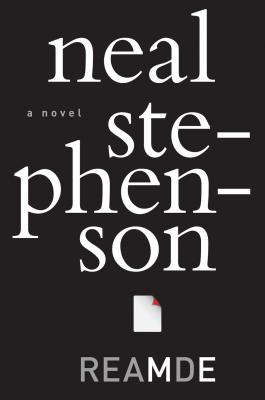
Book of the Week: REAMDE

We are incredibly excited that Neal Stephenson (the author of enormously popular and enormously satisfying books like Cryptonomicon, Snow Crash, The Diamond Age, and the hefty Baroque Cycle--Quicksilver, The Confusion, and The System of the World) is coming to Kepler's tonight. He'll be signing REAMDE, which is his newest novel and our Book of the Week. His publisher was kind enough to send us a set of questions and answers, so read on to learn more!


Get the book HERE.

An interview with Neal Stephenson, author of REAMDE.

Q: Reamde is an adrenaline-fueled, non-stop action adventure thriller with a large international cast of compelling characters. How did you come up with the idea? 

NEAL STEPHENSON: It's been banging around in my head for years. We've all grown accustomed to stories about computer viruses that come out of nowhere and sweep across the world in days. I thought it would make a good plot hook to imagine a situation in which a powerful and vengeful person was seriously inconvenienced by such a virus, and decided to track down the hacker who created it and get even.

Q: Central to the storyline is Richard Forthrast’s massively multiplayer online role-playing game, T’Rain. Are you a serious gamer? Any plans (or dreams) to make T’Rain a reality?

NEAL STEPHENSON: I definitely spend more time than is good for me playing games, to the point where I put together a system for playing XBox while using an elliptical trainer. But my few encounters with actual twelve-year-old boys in the online universe have made it clear that I cannot aspire to the title of "serious gamer."

Making T'Rain a reality would be a massive tech development project that would probably extend over several years and require hundreds of millions of dollars in capital. If someone wants to pony up the dough, I'd be happy to get involved!

Q: One of the interesting backstories in the book is how T’Rain was developed and the unique talents behind it—especially the writers who devised its bible. What connections do you see between an MMORPG like T’Rain and literature—storytelling? Would you consider that kind of game to be a kind of participatory literature?

NEAL STEPHENSON: The two writers are a kind of self-parody; I've taken two literary tendencies that are always competing for control of my keyboard, and made them flesh.

All role-playing games are a kind of improvisatory literature. It's easy to make fun of RPG dorks. But those games wouldn't be interesting unless the people playing them were coming up with interesting characters and spinning tales with legitimate narrative qualities--some of which are at least as good as what gets published as officially sanctioned literature.

Q: Talk about your characters. While Richard is the central figure, his niece, the super-smart, super-cool Zula, is a great kickass heroine. You’ve also got a frighteningly intelligent and supremely capable villain in Jones. What inspired their creation?

NEAL STEPHENSON:
It's difficult to tease specific answers out of the morass of ideas and impulses that is my brain. In general, though, I would say this about thrillers. The characters in thrillers find themselves in crazy, dangerous situations that fortunately don't happen to the vast majority of real humans. As a writer, you have two basic approaches as far as coming up with characters is concerned. You can make your characters into James Bond/Jason Bourne types who live in the thriller universe all the time, or you can come up with more realistic everyday characters---people you might expect to meet in the pages of a more sedate, literary novel, say---and then plunge them into the thriller universe, whereupon it becomes more of a fish-out-of-water proposition. I've taken the latter approach just because I think it gives me more options as a writer.

Q:
Reamde is a massive tale with a number of moving parts. How did you keep track of the divergent characters and parallel storylines as you were writing?
 
NEAL STEPHENSON: With a spreadsheet. Sorry.

Q: Your previous novels have been set in the future and in the past. Reamde is a story that is very much of this time and place. How does this novel connect to your previous books?

NEAL STEPHENSON: While it's true that I've done a lot of future and past writing, the fact is that The Big U, Zodiac, half of Cryptonomicon, and all of Interface and The Cobweb (the thrillers I co-wrote with my uncle) are set in basically the present day, and even Anathem takes place largely in a setting that is very close to contemporary society. So, it doesn't feel like much of a departure for me. While it's enjoyable to make up imaginary future societies or bring old ones back to life, there's also a lot to be said for working within the present-day world and being able to fold commonplace observations into the story.

Q: Your work has been called cyperbunk, post-cyberpunk, speculative, historical fiction, even baroque, and you have proudly called yourself a science fiction writer. How have you and your ideas—and your writing matured—since Zodiac and Snow Crash? How are those changes reflected in Reamde?

NEAL STEPHENSON: I'd say that when I was younger I felt insecure about my ability to supply the old-fashioned literary qualities of plot and character and so made up for it with "special effects." But working on the Baroque Cycle renewed my interest in plot for plot's sake, and the virtues of just telling a good yarn, and so you could think of REAMDE as me just writing a book that is all about plot. This doesn't mean that every book I ever write henceforth is going to be the same way, but I did want to have a go at it.

Q: Your novels explore a number of specialized subjects—mathematics, currency, science, technology. Are you surprised at the success you’ve achieved?  What might the future hold for expansive novelists like yourself in an age of shrinking attention spans, an age that is becoming increasingly defined in 140 letters (or less)?

NEAL STEPHENSON: When faced with that kind of competition, you can go one of two ways. You can try to become like the competition by making things briefer and more tweet-like. Or you can play to the real strength of the novel as an art form, which is its ability to handle material of great scope. I would argue that the success of long-form television series such as Battlestar Galactica and Game of Thrones is a reaction against all the forms of media that play on short attention spans. The audience enjoys immersion in worlds of enormous scope. The only media that can provide that experience are novels, television series, and increasingly games. 

Q: Throughout the post-World War II period, science fiction was predictive of where society and technology were headed. Today, science and reason are being undermined by a number of cultural forces. Where is science fiction/speculative fiction headed as our optimism and faith in science declines? 

NEAL STEPHENSON: If I have anything to say about it, we'll soon be seeing more SF that recalls the Golden Age techno-optimism of the 1950s. Not in a naive or campy way, but in a way that gives young scientists and engineers something that they can realistically aspire to during their careers. We are still flying around on airplanes and getting energy from reactors that were designed during the 1960s, and in many cases, such as Fukushima, we're paying a price for our lack of technological imagination. This decline in innovation has coincided with a growing hostility toward science and technology on both the left and the right, and with a turn toward a sort of hackerish cool hip gloominess in the SF world. We have to snap out of it.


Thursday, September 29, 2011

Book of the Week: Mr. Fox

Helen Oyeyemi's new novel comes out today in the US. Mr. Fox is one of my two favorite new novels of the year (the other one is The Family Fang by Kevin Wilson), so I'm delighted that it will soon be on bookshelves everywhere. Go forth!


Get the book HERE.

I had the pleasure of interviewing Helen for Fantasy Matters. We talked about Mr. Fox, fairytales, and her current art pleasures. And, in case you need further persuasion to take a look at this fantastic novel on its American birthday, here's my review that will be appearing on our October list of staff picks:

This is the story of a love triangle between Mr. Fox, a famous author, his wife Daphne, and Mary Foxe, a woman who is both his muse and a figment of his imagination. It is, in fact, several stories, each managing to be vivid and odd, as well as charming and brutal in turns. Mr. Fox and Mary Foxe find themselves transformed into different roles, playing out the magic of fairytales, the shock of violence, and the difficulties of falling in love.

This novel is written with precision, wit, and a warmth that illuminates, but doesn’t obscure. It is an intricate and beautiful set of Chinese boxes. I found myself eager to dive from one to another, and astonishingly sad when I reached the end.
--Megan K.

Tuesday, September 13, 2011

Book of the Week: The Night Circus

We are jumping on the bandwagon today to tell you about one of the most talked-about and breathlessly anticipated debut novels of the season. Today is the day that Erin Morgenstern's first novel, The Night Circus, appears on bookshelves across the country, setting the hearts of booksellers (who are somehow never jaded by the joy of sharing a book they are terribly excited about) aflutter.

Get the book HERE.

The Night Circus is a lush, atmospheric, beautifully written fantasy about two magicians who duel each other as part of a mysterious circus that appears with the night. It has already received the stamp of approval from luminaries of that particular stripe of fantastical, intelligent, and slightly (or very) odd literature that I, personally, find most appealing: Audrey Niffenegger, Aimee Bender, and Katherine Dunn have already contributed enthusiastic praise. Almost every bookseller I know who has read this book is endearingly overexcited about how much they love it.

I haven't read it yet. But, I am definitely picking up a copy today. Read Penelope B.'s review below and I'm sure you'll be joining me.
When the Night Circus arrives, it does so on tides of slumber. You never hear the train shudder to a stop or the tents that toss you from a dream as they billow in the wind. When you awake, the circus is simply there, sumptuous tents that flow in endless streams. The scents of embers, rose, and caramel stun the senses as an ornate carousel clock reminds you to make haste and find a seat.

This tale is centered around two young illusionists who have been trained since childhood to duel one another within the confines of their chosen arena, the Night Circus. But a venue crafted from such mastery has its own history of secrets. In this book, Erin Morgenstern has created a world, grandiose and rich with lyricism, that I found very hard to leave.
--Penelope B.
And I just discovered this treat. A video sneak peek of the very great Jim Dale recording the audiobook of The Night Circus:

Thursday, September 8, 2011

Book of the Week: Ghosts by Gaslight

It still feels like summer, but fall is swiftly approaching. And there is no more appropriate companion to the season of chilly evenings and falling leaves than a good ghost story. Sarah Langlais, mistress of the Kepler's webstore, advises you to get a head start with this book.


Get the book HERE.

Ghosts by Gaslight is the perfect example of what a short story collection ought to be. Though the stories are meant to convey a sense of dread (and indeed, many of them do - especially Lucius Shepard's dirty little tale), I found myself utterly delighted. It has always seemed to me that ghost stories are best suited for briefness—else the author runs the risk of losing the tension. And yet, I am often frustrated by short stories that seem to have been plucked from some greater tale. The varied authors of the tales in Ghosts by Gaslight have avoided this trap to the one.

It's fairly common in multi-author collections to have pieces that are, well, filler. I didn't find a single one in this entire collection. Certainly, there are some stand-outs, but each and every author seems to have brought their best to bear. I was especially impressed by how many managed the particular cadence of the Victorian-era without descending into parody. I would also note that the steampunk nature of the collection is profoundly understated. There's not a single dirigible to be had, and for these small things this particular reader is endlessly grateful.
--Sarah L.
_______________________________

There is a bang-up fabulous table of contents in this anthology and it includes some of my favorite authors of the fantastic. I'd like to point you especially toward Peter S. Beagle, Gene Wolf, Margo Lanagan (if you haven't read Lanagan's short fiction yet, you are in for a wholly disturbing and gloriously, viciously beautiful treat), and Jeffrey Ford. I haven't read the book yet myself, but I recently discovered a copy in my box at work and it is now resting, alluringly, on the top of the stack that is obliterating my bedside table.

Wednesday, August 31, 2011

Book of the Week: Just My Type

You might not expect a book about fonts to be addictive... Then again, maybe you've already watched Helvetica, and I'm just late to the party. Just My Type by Simon Garfield is seriously addictive. Bite-sized stories about things that surround us and talk to us every single day. They go down easy and make you pay attention to something that you might take for granted (or not... I'm looking at you, graphic design junkies!).


Get the book HERE.

Fonts are not something that can be ignored. They are everywhere—in books, on books, in your car, on your coffee cup, emblazoned across every piece of advertisement that you receive—proclaiming things to be SERIOUS, LUXURIOUS, INTELLECTUAL, HUMOROUS, SILLY, or maybe even EFFORTLESSLY COOL. They are not just serviceable wrappings for communication. They are works of art, or offenders of the eye, and they say things underneath the naked message of the words they portray, coded in the wordless languages of space, proportion, and line.

In this book, Simon Garfield tells us the stories of some of the fonts, both famous and obscure, that surround us today. He lavishes them with enthusiasm and sharp detail, introducing us to the people and circumstances that created such celebrities as Arial, Times New Roman, and Helvetica. He is often funny and always entertaining, and you will quickly find yourself more deeply invested in the subject than you might like to admit. Read this if: you swoon over graphic design, enjoy curios, or think Chip Kidd is a genius.

Thursday, August 25, 2011

Book of the Week: The Language of Flowers by Vanessa Diffenbaugh

Nancy S., who has a preternaturally accurate talent for picking out the books that will be loved by many before they hit anyone else's radar (a shelf of Nancy's recommendations is basically a visual catalog of recent and future bestsellers), would like you to read Vanessa Diffenbaugh's debut novel, The Language of Flowers. This elegant and emotionally intense novel came out just this week, but already sports an impressive assortment of enthusiastic words.

Get the book HERE.

Nancy says:

"I haven't read anything this good by a first-time novelist since The Help. I can't even do justice to it by writing about it. If I had five stars to give it, I would reinvent the system and give it ten. Writing, characters, plot... it's all there. Do yourself a favor... enjoy this book. It's amazing."

Learn more from the author herself:

Tuesday, August 16, 2011

Book of the Week: The Family Fang by Kevin Wilson

The book that I am currently pressing into everyone's hands is The Family Fang by Kevin Wilson. It's the late summer novel that I've gone crackers for, fallen a little bit in love with, and can't stop talking about. I read an advance copy back in March, so I am DELIGHTED that the book is finally out and everyone else can read it too.

(isn't that a stylish cover?)

Get the book HERE.

Meet the Fangs: Caleb and Camille (Mr. and Mrs.), Annie and Buster (Child A and Child B). Caleb and Camille are performance artists who attack normal life with audacious “happenings.” They stage rejected wedding proposals, agreed-upon shootings, fanciful candy store heists; and when they have children, they drag them along. Buster wins a beauty pageant in drag. Annie plays a scandalous Juliet. Everything exists for the creation of art. Until Annie and Buster leave, fed up, to grow up and come back again, licking their wounds, to face the most shocking “happening” in their lives.

The Fangs are exceptionally strange and exceptionally dysfunctional, and the oddness of them, both as a unit and alone, should render them aggravating or, at the very least, unbelievable. But Kevin Wilson’s writing is large in heart and wit, and his novel is one that you will want to return to, or stay in, for as long as it lasts because you find yourself falling in love. Enjoy the absurdities, but remain for the crackling shock at the end. Read this book if: you enjoy Wes Anderson, you want to imagine the effects of a potato gun.
-Megan K.
----------------------------------------

The Family Fang is on the August 2011 Indie Next List, a 20-book strong collection of some of the August titles that independent booksellers are mad about.

You can read a charming profile of Kevin Wilson in the New York Times here. You can see a photo of the tattoo that they mention here, on Mr. Wilson's blog. Bonus treat: Mr. Wilson links to MANY of his short stories in the sidebar of his blog. You should check them out. I particularly recommend "The Museum of Whatnot" and "Spy vs. Spy."